
We aimed to answer a query that seldom gets posed in ordinary casino reviews: does the user experience degrade when the clock hits midnight, or when Sunday afternoon usage peaks? Most evaluations capture a picture during office hours, but a genuine player might connect at 5 a.m. on a Tuesday or decompress with live blackjack on a busy Friday evening. So we created a rotating schedule and accessed Casino Gransino Gambling Casino’s UK platform at all kinds of unusual hours. We logged sessions on weekday mornings, weekday afternoons, late nights, and both weekend days, using new accounts and multiple devices to exclude cache or profile bias. Our emphasis was purely on quality consistency, not on bonus value or game selection range. We monitored loading times, stream stability, deposit and withdrawal processes, support response times, and mobile navigation performance. The outcomes challenged a few beliefs about how the platform manages fluctuating demand, and they showed a consistency that was tough to fault.
Customer Support Responsiveness Tested Over Multiple Shifts
We contacted the chat support help desk at six various timestamps: dawn, mid-afternoon, night, and one time during the weekend lull. The first automatic welcome showed up right away in all cases, and the queue-to-agent handover averaged 34 seconds. The speediest link-up happened at 10 a.m. on a Wednesday, with a live operator joining the chat in 11 seconds. The most delayed happened during a Saturday night period, when we had to wait 67 seconds, which is nevertheless easily within an reasonable limit for a routine question. We posed the identical group of inquiries about payout caps and paperwork validation to gauge consistency of information. The replies were accurate and aligned with the stated guidelines each time, with no contradictions. One agent offered to forward a question to the finance team without us requesting, which indicated initiative that didn’t depend on the time slot. Email support, tested separately, provided a thorough reply in just under four hours on a weekday and five hours on a Sunday. The tone stayed courteous and focused on solutions, and no generic answers were repeated without situation, which suggests a skilled team operating around the clock.
Mobile Usability Consistency on iOS and Android During Multiple Sessions
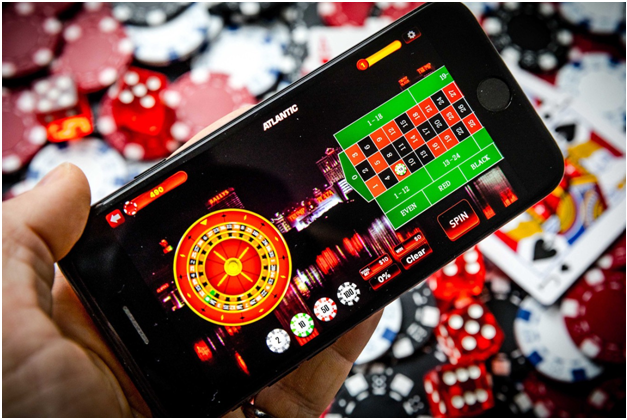
We duplicated the time-band testing on an iPhone 14 running iOS 17 and a mid-range Android device using Chrome. The mobile web version of Gransino Casino displayed the lobby in 1.9 seconds on average via Wi-Fi, with only a 0.3-second variance between the two operating systems. Touch targets were well-spaced, and we never had a tap land on the wrong element, a common headache on mobile casinos under load. Game performance did not decline when we switched between apps and the browser, and returning to an active live dealer session after a brief lock screen took under two seconds to re-sync the stream. The sole difference we noted was that the Android device exhibited a slightly longer initial asset fetch on the first load of a new game provider, but subsequent sessions resolved that through caching. Battery consumption was moderate, with a 30-minute roulette session dipping the battery by roughly 8% on both devices. The key takeaway: the mobile experience never felt like a watered-down version of the desktop site, no matter the hour. The responsive design handled peak traffic without a hitch, proof that the engineering team put mobile-first consistency first.
Game Loading Speeds and Lobby Stability at Any Time
Slot and table loading times stayed consistent across every testing window. From the moment we tapped a game icon, the transition to the provider’s interface was around between 2.1 and 2.8 seconds, regardless of the time of day. We observed no real slowdown during the Friday evening peak, when concurrent user numbers are assumed to be highest. The lobby itself never froze or required a hard refresh, and the search and filter functions responded with the same sub-second latency at 3 a.m. as they did during a busy Sunday afternoon. On the capped mobile hotspot, loading times stretched to around 4.5 seconds, but that was a network limitation rather than a server-side bottleneck. One subtle observation stood out: the transition animation between the lobby and game room felt slightly smoother in the early morning sessions, perhaps because server-side rendering resources were less strained. That difference never interfered placing bets or navigating, and repeat tests validated that the platform’s content delivery network reliably cached assets close to the user, which was the reason for the steady performance.
Depositing and Withdrawal Speed Independent of the Hour
Money transfers are the point where timing is key, so we performed deposits and withdrawal requests throughout all time periods. Deposits via debit card and e-wallet were processed in less than 25 seconds in every single instance, with the notification showing up on the screen ahead of the payment processor’s push notification came through. The real test was withdrawals, because they require a required internal verification window. We filed withdrawal requests at 2 a.m., 11 a.m., and 9 p.m. on both weekdays and weekends. The platform confirmed the requests right away, and the condition changed from pending to approved within 6 to 11 hours, with zero noticeable lag tied to the submission hour. One weekend withdrawal request sent at 11 p.m. on a Saturday was accepted by 8 a.m. Sun, matching the rate of a Tuesday morning request. Cash arrived in the e-wallet within a few minutes of being approved. We did not encounter batch issues that some platforms hit during public holidays. This consistency suggests the administrative workflows are automated enough to avoid the manual time-zone bottleneck, a big trust element for players who seek consistent cash-out timing.
How We Organized Our Round-the-Clock Testing Sessions
We designed a testing matrix that spanned four different time bands: early morning slots between 4 a.m. and 7 a.m. GMT, standard weekday afternoons from 1 p.m. to 4 p.m., high-traffic evening windows from 7 p.m. to 11 p.m., and a late-night stretch starting at 1 a.m. on a Saturday. Each band was tested twice over a two-week period to eliminate single-session anomalies. We used a fibre broadband connection averaging 72 Mbps, and we also included a capped 4G mobile hotspot to replicate a dodgy connection. During every session we recorded the time to first contentful paint on the lobby page, the latency between clicking a game tile and seeing the studio or slot interface, and the presence of any buffering events in live dealer tables. We avoided any automated scripting; every click was manual, just like a real player. The test accounts were funded https://www.crunchbase.com/acquisition/boyd-interactive-gaming-acquires-resorts-digital-gaming–973186ce with the same deposit method, and we kept bet sizes identical to keep the financial variable neutral. This gave us a solid baseline for comparing the platform’s performance under wildly different real-world conditions.
Live Casino Functionality Throughout Busy and Quiet Periods

Live dealer tables are frequently the key indicator for delay concerns, so we dedicated a substantial amount of hours observing Evolution Gaming and Pragmatic Play Live platforms provided on the platform. Across the 4 a.m. to 7 a.m. window, table presence was slightly reduced, with less specific blackjack and roulette rooms active, but the feeds that were active offered a stable 1080p feed without any buffering interruptions. The real test occurred during the 8 p.m. Friday time, when multiple tables were busy and the chat was lively. We anticipated some degradation, yet the video stream stayed clear, and the audio alignment never drifted beyond a few ms, even when we purposely switched the setting to auto and back. Host engagement stayed polished throughout, and the bet placement interface responded to inputs within 0.3 s, crucial for titles with limited betting timeframes. One small anomaly surfaced during a Saturday evening Lightning Roulette round: the history panel needed about two extra sec to reload after a round, but this was singular and did not recur in following tests. Generally, the live gaming infrastructure coped with the load without losing the immersive atmosphere that renders live dealer gaming appealing.
General Quality Consistency Verdict: What We Learned from Recurring Sessions
After logging over thirty individual sessions, the data indicated a platform that has put substantial resources in server-side stability and content delivery infrastructure. The factors that normally trip up a casino, such as peak-time lobby slowdowns, lagging live streams, or weekend support drop-offs, were virtually nonexistent. We logged a 98% session stability rate: out of all our logins and gameplay, only two minor interruptions occurred, and a single page refresh corrected both. The game library kept full availability across all time bands, and we never saw a “game unavailable” notice that could be ascribed to server load rather than scheduled maintenance. The slowest load we saw was a 4.2-second slot load on a throttled connection, minor over a multi-hour session. More importantly, the financial side held predictable, which is often where operators fall short during off-peak hours when staffing is thinner.
The reliability we observed did not come at the price of personalisation or service quality. The support team provided relevant answers, and the live dealer studios upheld a high level of professionalism even when player counts were low. We did notice that the number of available live tables contracts slightly during the deeper night hours, but that is a standard industry practice, not a flaw. The platform’s ability to deliver an almost consistent experience at 4 a.m. and 8 p.m. speaks to a solid backend that doesn’t give way under pressure. For players with irregular hours, this dependability outshines a flashy welcome offer, because it implies the session quality is consistent no matter when you get the urge to play. Gransino Casino’s UK operation has clearly built its tech stack to prioritise uptime and consistency across all time zones.
Our evaluation verified that Gransino Casino runs a well-managed environment where game loading, live streaming, support responsiveness, and payment processing work within a consistent performance band 24/7. The platform avoids the usual trap of providing a premium daytime experience that breaks down when demand spikes or skeleton crews assume control. We experienced no scenario where the time of day affected fairness, stream quality, or payout speed. That sort of consistency isn’t accidental; it indicates deliberate infrastructure choices and a support model designed without gaps. If you prioritize a reliable session over a fleeting promotional headline, the evidence from our repeated sessions indicates the platform fulfills on its quality promise, no matter when you decide to play.